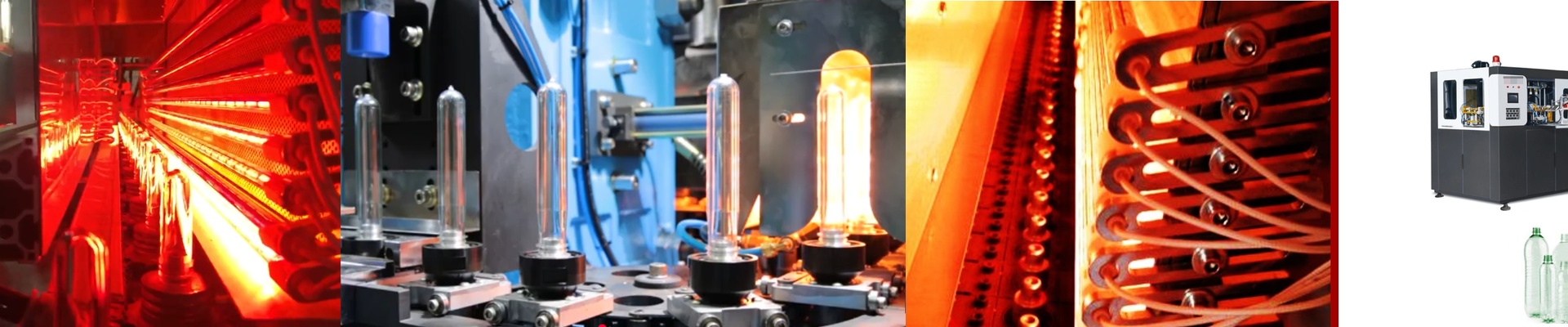

On a Husky HyPET HPP 4.0, the heating tunnel doesn’t forgive guesswork. Let lamp output drift, and preform temperature goes all over the place. Next thing you know, you’re scrapping PET—thickness swings, crystallization, weak necks. Downtime costs, and so does backing off the machine speed just to stay in the window. We built the HyPET HPP 4.0 heater lamp to match the machine’s original thermal profile, not some rough approximation.
What matters under the hood
It’s a short-wave infrared emitter, tuned to PET’s absorption peak so you get fast, through-the-wall heating. Run it at the specified voltage and wattage for the HPP 4.0 heating zones, and the radiant power stays stable—keeping preform surface temperature inside the narrow band stretch blow molding needs. The quartz envelope is chosen for serious thermal shock resistance, and the lamp uses the correct R7s connector so it drops straight into the holder. No rewiring. We hold filament geometry and reflector alignment to keep the heating pattern consistent across the preform wall. That’s why the same lamp repeats cycle after cycle without you having to retune the oven.
Why it plays nice on the HyPET HPP 4.0
On this machine, heating consistency is what keeps you at design speed. Swap in a lamp that matches the OEM parameters, and you get the intended temperature curve back: quicker stabilization after start-up, less drift on long runs, and far fewer rejects from preforms that ran too hot or too cool. In practice, that means fewer line stops for recalibration and steadier output when you’re stacked up on high-volume SKUs. It also gives you repeatable performance across heating modules, so you can swap by zone without re-engineering the whole tunnel.
What to watch on install
Installation is straightforward, but keep the infrared window clean and unobstructed. Even a thin film of dust or coolant residue will knock down effective power and create hot and cold spots. Make sure lamp orientation and reflector position match the original layout, and verify voltage at the terminal. Plan replacements during scheduled maintenance windows. You can do a hot lamp change, but it needs disciplined lockout/tagout and proper heat protection. Expect peak output right after start-up, then a stable plateau—run the lamp within its rated duty cycle and you’ll get the full service life.