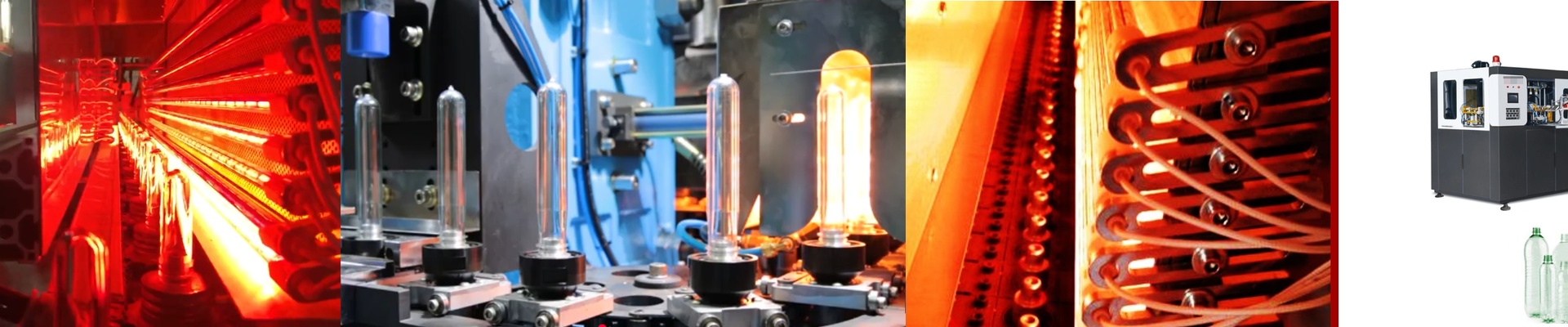
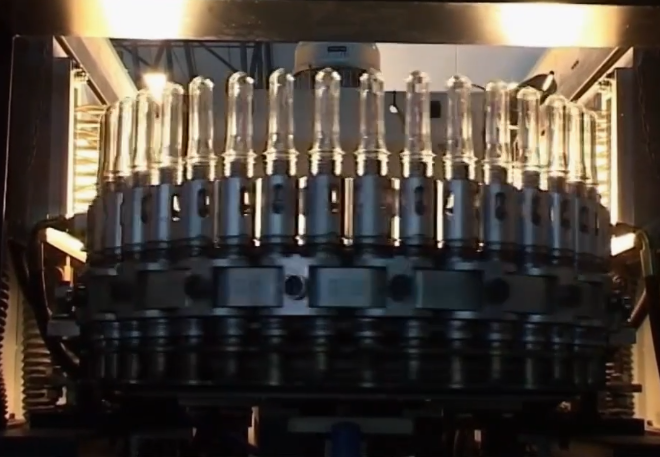
On the plant floor, a heating curve that’s even slightly off doesn’t just cost you speed. It pushes preforms into temperature splits, flashes, and bottles that miss spec. When the heating tunnel on your Sidel, Krones, SIPA, or KOSME blow molder has to hold up under 24/7 duty, the heater tube needs to deliver repeatable heat—consistently and fast. What matters, technically KOSME blow molding heater tubes are built around short-wave infrared quartz emitters, matched to the machine’s power budget and lamp array. The design is all about a controlled temperature rise: the preform skin heats first while the core stays cooler until stretch begins. That’s the core of preform penetration heating. Tight power matching keeps the thermal field stable across the heating tunnel, so you don’t get hot spots and cold edges. The specs are engineered to OEM dimensions, including R7s connectors and standard tube lengths, so you can swap the tube without reworking brackets or rewiring the block. Why this matters in stretch blow molding In stretch blow molding, cycle time and bottle quality come down to how quickly and evenly the preform hits the right stretch temperature. With a stable heat profile, you can push for higher throughput without pinning the heater, and that cuts rejects from stress cracks and uneven wall thickness. The tube’s fast response also cuts warm-up wait, and the lower energy draw per cycle shows up in the utility numbers. For KOSME machines—and compatible lines from the major OEMs—this is a direct-fit upgrade that keeps the heating section doing exactly what it was designed to do. The practical details you can’t skip Installation is straightforward, but alignment is non-negotiable. Even a small gap or a mis-seated R7s connection can throw off the heat pattern and shorten lamp life. Keep reflectors clean and check reflectivity regularly; otherwise the thermal field drifts and preform heating turns inconsistent. If your line runs heavy color shifts or thicker walls, confirm power settings through the blow molder’s HMI. The heater should adapt to the job, not the other way around.